
Sources &
image credits.
History is an interpretation of evidence. Follow the references, inspect the objects, and read beyond these pages.
How to read this atlas
Numbered links beside paragraphs and visuals lead to page references. These connect original summaries to museum collections, scholarship, historical documents, and reference works. Source titles link to the materials themselves; some external sites may change or restrict access.
Modern locator maps orient the reader, not reconstruct borders. Diagram connections are simplified relationships, not measured geographic routes. Pre-1500 events provide context; post-1900 references clarify continuities. Approximate dates are marked. No historical images in this atlas were generated by AI.
Songhai
Explore history- 13.2 The Songhai Empire ↗
OpenStax, Rice University · World History, Volume 2, from 1400. Accessed 2026-10-07.
- 2Tomb of Askia ↗
UNESCO World Heritage Centre. Accessed 2026-10-07.
- 3The Empires of the Western Sudan ↗
Department of Arts of Africa, Oceania, and the Americas · The Metropolitan Museum of Art · October 2000. Accessed 2026-10-07.
- 4Timbuktu ↗
UNESCO World Heritage Centre. Accessed 2026-10-07.
- 5Ancient Manuscripts from the Desert Libraries of Timbuktu — exhibition ↗
Library of Congress. Accessed 2026-10-07.
- 6Secular Power and Religious Authority in Muslim Society: the Case of Songhay ↗
John Hunwick · Cambridge University Press · The Journal of African History 37(2), 1996, pp. 175–194; public extract and notes consulted. Accessed 2026-10-07.
- 7Songhai Empire ↗
Mark Cartwright · World History Encyclopedia · 8 March 2019. Accessed 2026-10-07.
- 8Sahel: Art and Empires on the Shores of the Sahara — exhibition text ↗
The Metropolitan Museum of Art · 2020 exhibition. Accessed 2026-10-07.
Bambara
Explore history- 9The Bamana Ségou State ↗
Alexander Ives Bortolot · The Metropolitan Museum of Art · October 2003. Accessed 2026-10-07.
- 10Arts of Power Associations in West Africa ↗
Susan Elizabeth Gagliardi · The Metropolitan Museum of Art · January 2010. Accessed 2026-10-07.
- 11Antelopes and Queens: Bambara Sculpture from the Western Sudan ↗
Susan Elizabeth Gagliardi · The Metropolitan Museum of Art · May 2016. Accessed 2026-10-07.
- 12Excavating Empires of the Sahel: In Conversation with Daouda Keïta ↗
Will Fenstermaker and Isabella Garces; interview with Daouda Keïta · The Metropolitan Museum of Art / National Museum of Mali · 26 February 2020. Accessed 2026-10-07.
- 13Travels in the Interior of Africa, Volume I ↗
Mungo Park · Project Gutenberg; Cassell edition · 1893 edition of an account first published in 1799; observations from 1795–1797. Accessed 2026-10-07.
- 14Travels in the Interior of Africa, Volume II ↗
Mungo Park · Project Gutenberg; Cassell edition · 1887 edition of an account first published in 1799; observations from 1795–1797. Accessed 2026-10-07.
- 153.4 The Trans-Saharan Slave Trade ↗
OpenStax, Rice University · World History, Volume 2, from 1400. Accessed 2026-10-07.
- 8Sahel: Art and Empires on the Shores of the Sahara — exhibition text
Shared source; full reference above.
- 16Arts of Africa — inside the exhibition ↗
The Metropolitan Museum of Art. Accessed 2026-10-07.
Asante
Explore history- 17Asante Kingdom ↗
Introduction updated by Germa Seuren · African Studies Centre Leiden · Updated 2024. Accessed 2026-10-07.
- 18Art of the Asante Kingdom ↗
Alexander Ives Bortolot · The Metropolitan Museum of Art · October 2003. Accessed 2026-10-07.
- 198.3 Centralized Societies: Chiefdoms and States ↗
OpenStax, Rice University · Introduction to Anthropology. Accessed 2026-10-07.
- 20A history of Asante gold at the V&A ↗
Victoria and Albert Museum · Updated 23 October 2025. Accessed 2026-10-07.
- 21Asante Traditional Buildings ↗
UNESCO World Heritage Centre. Accessed 2026-10-07.
- 22Gold Dust Box (abamphruwa), object 1979.206.181a, b ↗
Kristen Windmuller-Luna · The Metropolitan Museum of Art · Curatorial essay, 2016. Accessed 2026-10-07.
- 23Geometric gold weight, object 1994.312.4 ↗
Enid Schildkrout · The Metropolitan Museum of Art · Curatorial essay, 2025; object dated 16th–17th century. Accessed 2026-10-07.
- 24Okyeame poma with stool, chain, and crossed swords — contextual essay ↗
The Metropolitan Museum of Art · Object itself dates to c. 1930s; contextual essay consulted for institutions. Accessed 2026-10-07.
- 25Unity: a collaboration between artist goldsmith Emefa Cole and the Asante royal goldsmith ↗
Victoria and Albert Museum · Updated 29 October 2025; historical context and metalworking explanation consulted. Accessed 2026-10-07.
- 16Arts of Africa — inside the exhibition
Shared source; full reference above.
Ethiopia
Explore history- 26Ethiopia: A Country Study — History ↗
Thomas P. Ofcansky and LaVerle Berry, editors · Library of Congress, Federal Research Division; reproduced by Mongabay · 1991 study / 1993 edition. Accessed 2026-10-07.
- 27Ethiopian State Formation and the Revolutionary Origins of EPRDF Dominance ↗
Tom Lavers · Cambridge University Press · Ethiopia’s ‘Developmental State’, 2023. Accessed 2026-10-07.
- 28Fasil Ghebbi, Gondar Region ↗
UNESCO World Heritage Centre. Accessed 2026-10-07.
- 29African Christianity in Ethiopia ↗
Emma George Ross · The Metropolitan Museum of Art · October 2002. Accessed 2026-10-07.
- 30Ethiopia at the Crossroads ↗
The Walters Art Museum · 2023–2024 exhibition. Accessed 2026-10-07.
- 31Historicizing Urbanism: The socio-economic and cultural pattern of the city of Gondar, Ethiopia ↗
Muluken Fikadie, Sisay Sahile, and Busha Taa · University of Gondar, Ethiopian Renaissance Journal of Social Sciences and the Humanities · 2018, volume 5, number 1; abstract consulted. Accessed 2026-10-07.
- 32Eastern Africa, 1600–1800 A.D. ↗
The Metropolitan Museum of Art · October 2003. Accessed 2026-10-07.
- 33Abyssinia Expedition ↗
National Army Museum. Accessed 2026-10-07.
- 34The Battle of Adwa: African Victory in the Age of Empire ↗
Raymond Jonas · University of Washington, Department of History · 2011 book description. Accessed 2026-10-07.
- 35The making of urban economies ↗
Oxford University Press · Politics and the Urban Frontier. Accessed 2026-10-07.
- 36The Maria Theresa Thaler in Ethiopia and Beyond ↗
Anne Parsons, reporting a lecture by Clara Semple · The Anglo-Ethiopian Society · Summer 2006. Accessed 2026-10-07.
- 37Current land policy issues in Ethiopia ↗
B. Nega, B. Adenew, and S. Gebre Sellasie · Food and Agriculture Organization of the United Nations; Ethiopian Economic Policy Research Institute · Land Reform, Land Settlement and Cooperatives; historical tenure overview consulted. Accessed 2026-10-07.
Swahili Coast
Explore history- 38The People of the Swahili Coast ↗
National Geographic Society. Accessed 2026-10-07.
- 39Stone Towns of the Swahili Coast ↗
Archaeology magazine, Archaeological Institute of America · January/February 2014. Accessed 2026-10-07.
- 403.3 The Swahili Coast ↗
OpenStax, Rice University · World History, Volume 2: From 1400. Accessed 2026-10-07.
- 41Ruins of Kilwa Kisiwani and Ruins of Songo Mnara ↗
UNESCO World Heritage Centre. Accessed 2026-10-07.
- 42Stone Town of Zanzibar ↗
UNESCO World Heritage Centre. Accessed 2026-10-07.
- 43Lamu Old Town ↗
UNESCO World Heritage Centre. Accessed 2026-10-07.
- 44Fort Jesus, Mombasa ↗
UNESCO World Heritage Centre. Accessed 2026-10-07.
- 45Fort Jesus Museum ↗
National Museums of Kenya. Accessed 2026-10-07.
- 46Eastern Africa, 1600–1800 A.D. ↗
The Metropolitan Museum of Art · October 2003. Accessed 2026-10-07.
- 47Part 4: Slavery, the Slave Trade, Abolition, and Ironic Consequences ↗
College Board, AP Central. Accessed 2026-10-07.
- 48Zanzibar Outlaws Slavery ↗
Fred Strickert · EBSCO Research Starters · 2023. Accessed 2026-10-07.
- 49Slavery in Zanzibar ↗
UK Parliament, Hansard · 11 January 1894. Accessed 2026-10-07.
- 50The making of urban economies ↗
Oxford University Press · Politics and the Urban Frontier. Accessed 2026-10-07.
Kingdom of Kongo
Explore history- 51Mbanza Kongo, Vestiges of the Capital of the former Kingdom of Kongo ↗
UNESCO World Heritage Centre. Accessed 2026-10-07.
- 52Kongo Christianity: The Intersection of Two Worlds ↗
Cécile Fromont · The Metropolitan Museum of Art · 2025. Accessed 2026-10-07.
- 53The Visual Archive: A Historian's Perspective on Kongo and Loango Art ↗
Kristen Windmuller-Luna and Phyllis M. Martin · The Metropolitan Museum of Art · 2015. Accessed 2026-10-07.
- 54Kingdom of Kongo ↗
Mark Cartwright · World History Encyclopedia · 2019. Accessed 2026-10-07.
- 55Excerpt of letter from Nzinga Mbemba to Portuguese King João III ↗
Afonso I (Nzinga Mbemba) · World History Commons · Primary document, 1526; modern teaching edition. Accessed 2026-10-07.
- 56Women Leaders in African History: Dona Beatriz, Kongo Prophet ↗
Alexander Ives Bortolot · The Metropolitan Museum of Art · 2003. Accessed 2026-10-07.
- 57Christianity and Kongo Visual Culture ↗
Carlos Almeida · The Metropolitan Museum of Art / University of Lisbon · 2026. Accessed 2026-10-07.
- 58Crucifix (18th–19th century), object 1999.295.4 ↗
The Metropolitan Museum of Art. Accessed 2026-10-07.
- 59Patterns without End: The Techniques and Designs of Kongo Textiles ↗
Christine Giuntini and Susan Brown · The Metropolitan Museum of Art / Cooper Hewitt, Smithsonian Design Museum · 2015. Accessed 2026-10-07.
- 60The Kongo kingdom ↗
Royal Museum for Central Africa. Accessed 2026-10-07.
Zulu Kingdom
Explore history- 61Shaka Zulu ↗
South African History Online · 2011; updated 2026. Accessed 2026-10-07.
- 62Zulu ↗
South African History Online · 2011; updated 2026. Accessed 2026-10-07.
- 63The Mfecane: Understanding a Period of Transformation in Southern Africa ↗
South African History Online · 2025; updated 2026. Accessed 2026-10-07.
- 64Zulu War ↗
National Army Museum. Accessed 2026-10-07.
- 65Belt (Umutsha), 19th–20th century ↗
The Metropolitan Museum of Art. Accessed 2026-10-07.
- 66Musho! Zulu Popular Praises — publisher description and contents ↗
Liz Gunner and Mafika Gwala, editors · Michigan State University Press / BiblioVault · 1991. Accessed 2026-10-07.
- 67The Political Structure of the Zulu Kingdom During the Reign of Cetshwayo kaMpande ↗
J. J. Guy · University of Cape Town, eMandulo archive · 1981. Accessed 2026-10-07.
- 68Political revolution between 1820 and 1835 ↗
South African History Online · 2017; updated 2026. Accessed 2026-10-07.
- 69The Zulu kingdom and the colony of Natal ↗
South African History Online · 2011; updated 2026. Accessed 2026-10-07.
Images & geography
- 70Natural Earth 1:110m geography and terms of use ↗
Natural Earth · Public-domain map dataset. Accessed 2026-10-07.
The locator uses Natural Earth geography with approximate coordinates for Gao, Ségou, Kumasi, Gondar, Zanzibar, Mbanza Kongo, and Ulundi. These are orientation points selected from the historical centers described in each section. The dots are not territories or a complete inventory of settlements.
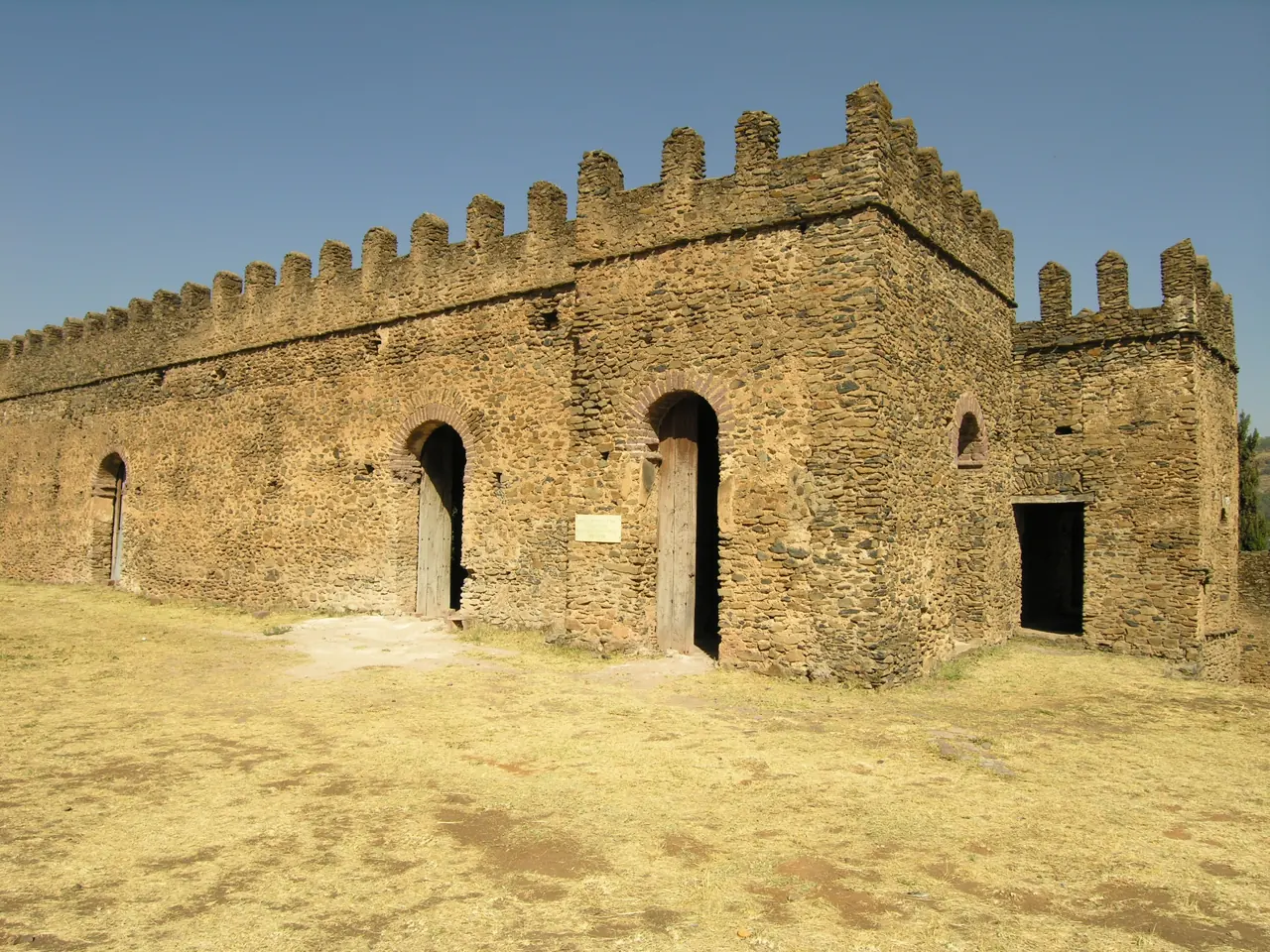
Bakaffa’s Palace at Fasil Ghebbi
Bakaffa’s Palace at Fasil Ghebbi, Gondar, Ethiopia. A modern photograph of the imperial royal enclosure that developed after Gondar became a permanent capital in 1636; photographed 12 February 2006.
Francesco Bandarin / © UNESCO · CC BY-SA 3.0 IGO
Resized and converted to WebP; same CC BY-SA 3.0 IGO license.
Original source & rights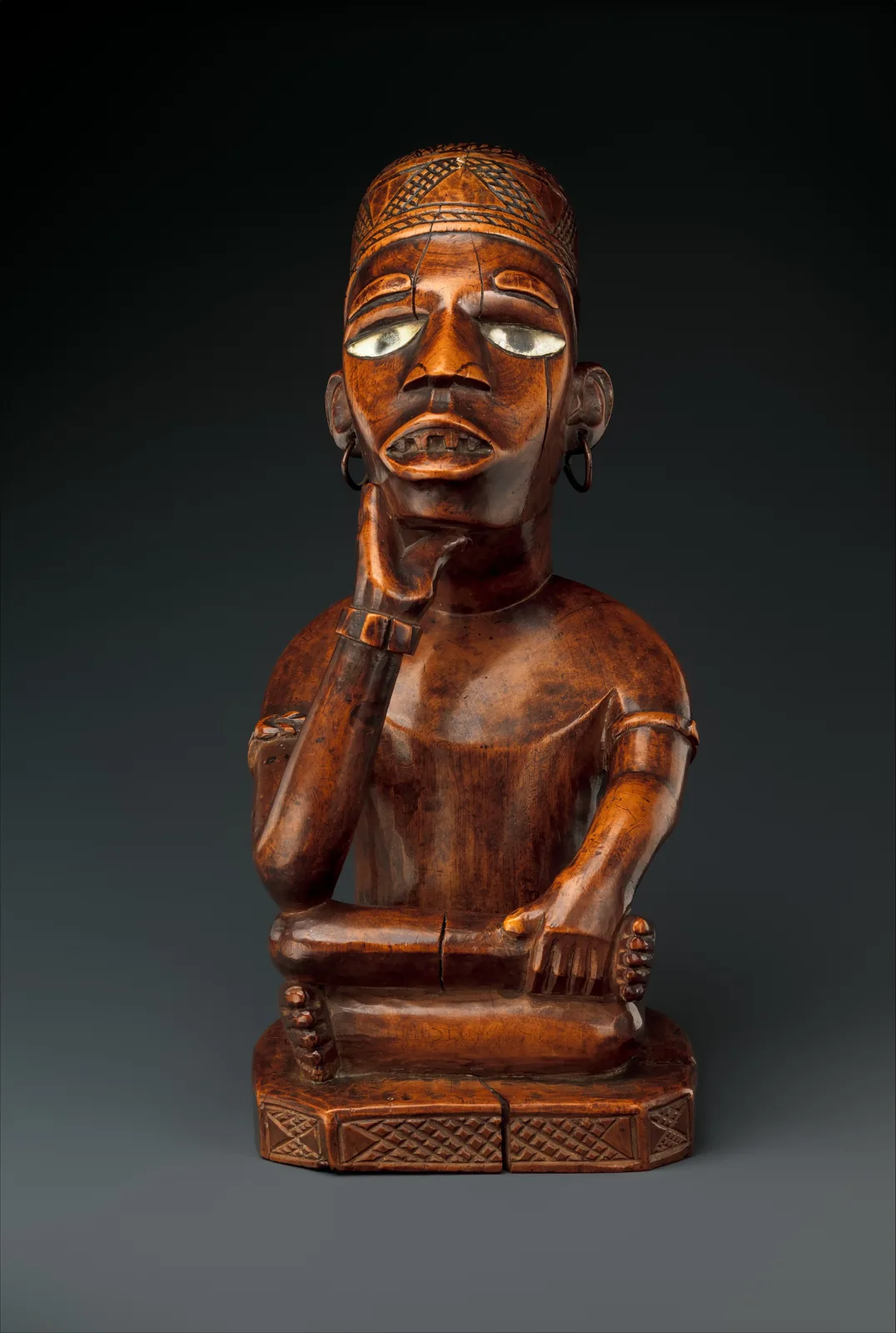
Seated Male Figure
Seated Male Figure, Kongo peoples, Kakongo group; Angola or Democratic Republic of the Congo, mid to late nineteenth century. Wood, glass, metal and kaolin. The Metropolitan Museum of Art, 1996.281.
Kongo artist, Kakongo group; image courtesy of The Metropolitan Museum of Art · Public Domain (The Met Open Access)
Resized and converted to WebP.
Original source & rights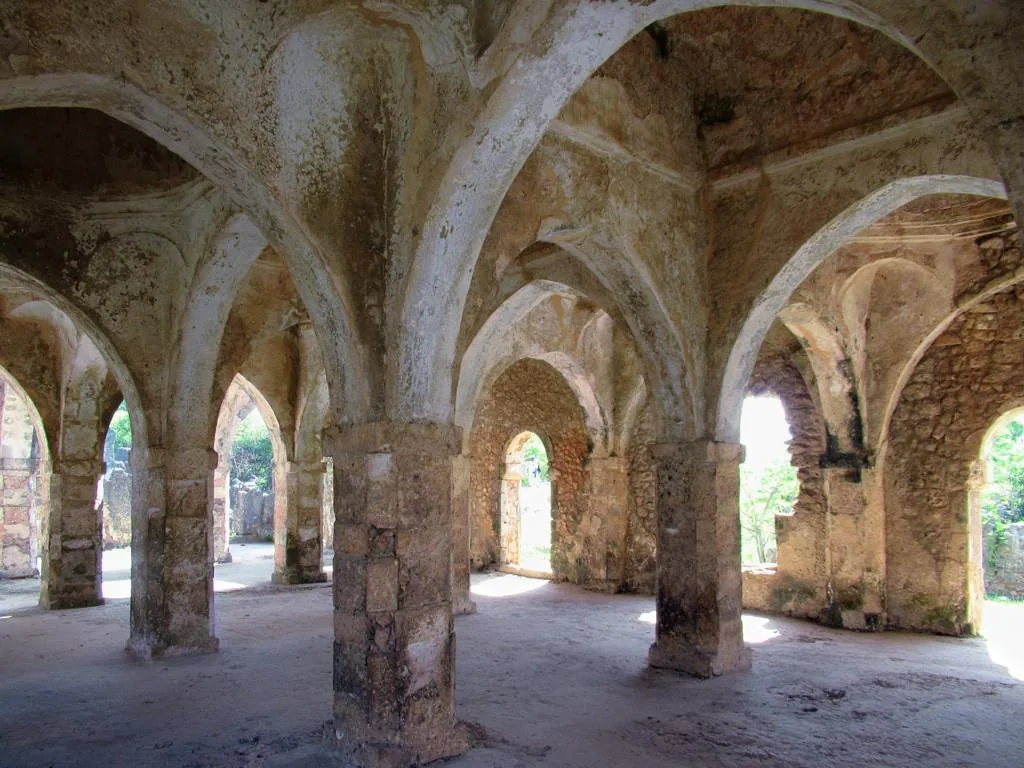
Great Mosque at Kilwa Kisiwani
Great Mosque, Kilwa Kisiwani, Tanzania. The surviving medieval mosque offers context for the Swahili coast’s long urban history before 1500; photograph taken 1 January 2017.
David Stanley · CC BY 2.0
Converted to WebP.
Original source & rights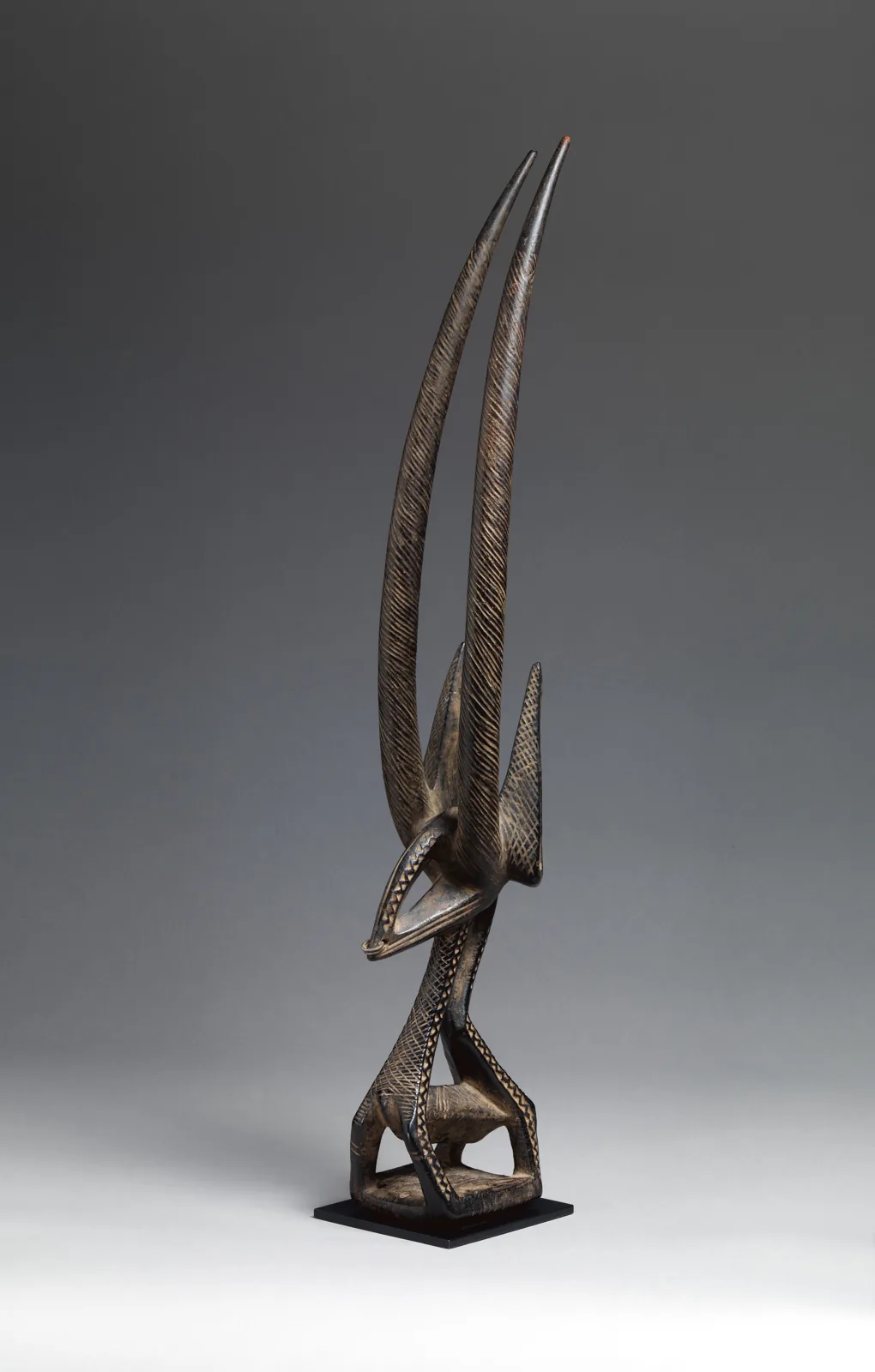
Ci wara headdress
Ci wara headdress, Bamana numu (blacksmith), south-central Mali, nineteenth century. Wood and metal. The Metropolitan Museum of Art, 2016.574. Such crests were worn in performances celebrating agricultural knowledge and labor.
Bamana numu (blacksmith); image courtesy of The Metropolitan Museum of Art · Public Domain (The Met Open Access)
Resized and converted to WebP.
Original source & rightsOriginal timelines and relationship diagrams synthesize the sources cited beside them. Photographs and object images are resized and compressed for the web; images in their full frames appear on the history and credits pages.